
Moving to a Regular Sharpening Station
Even a simple grinder can be easily and inexpensively upgraded to a sharpening station.
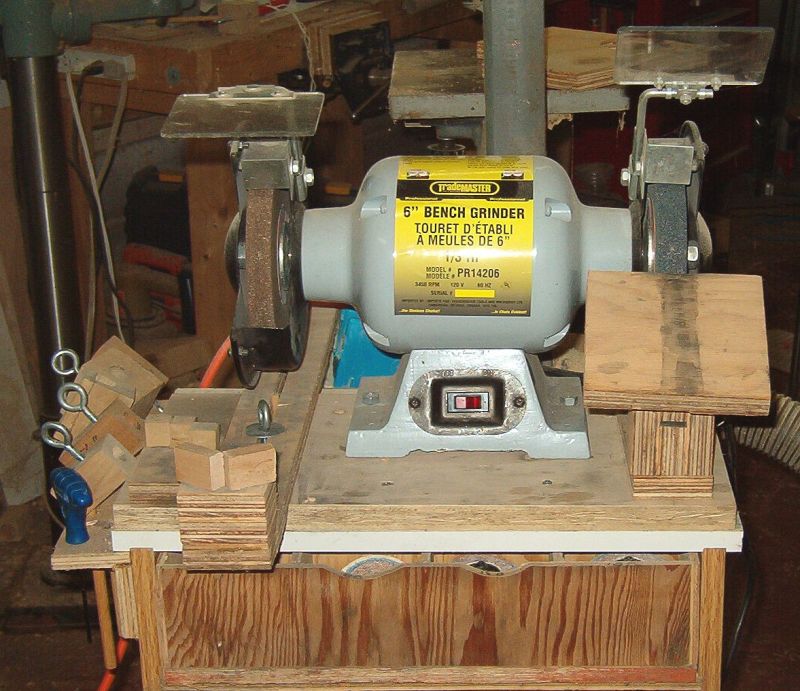
My tool of choice for this task of sharpening wood turning tools is the typical mass market grinder set up simply for the turner.
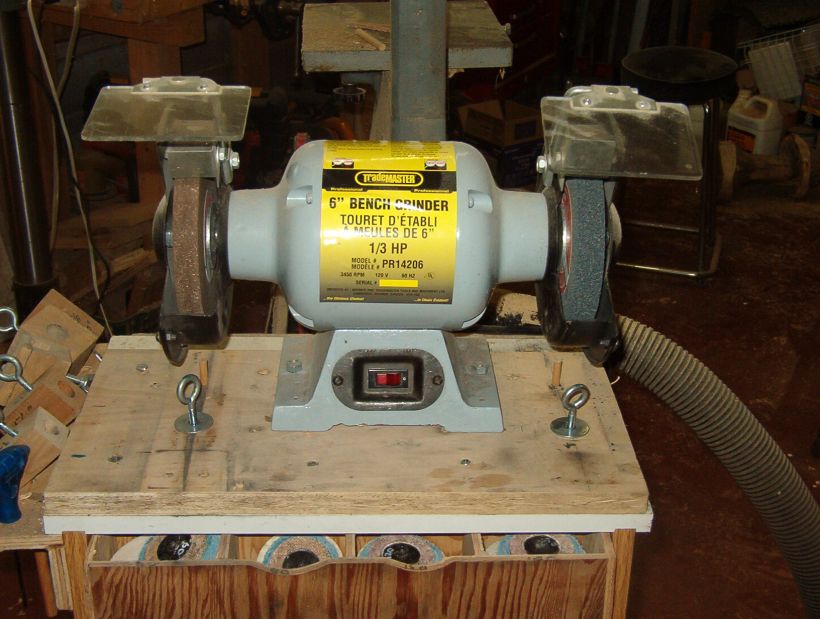
The mass market grinder is typically about 1350 rpm, has little useless grinding tables, and has two coarse carborundum wheels totally unsuitable for sharpening our tools. Start to think of this tool as a sharpener, not a grinder. Mine has 6" wheels but 8" are considered better by some. I start by removing the little tables. We will replace them with things that work.
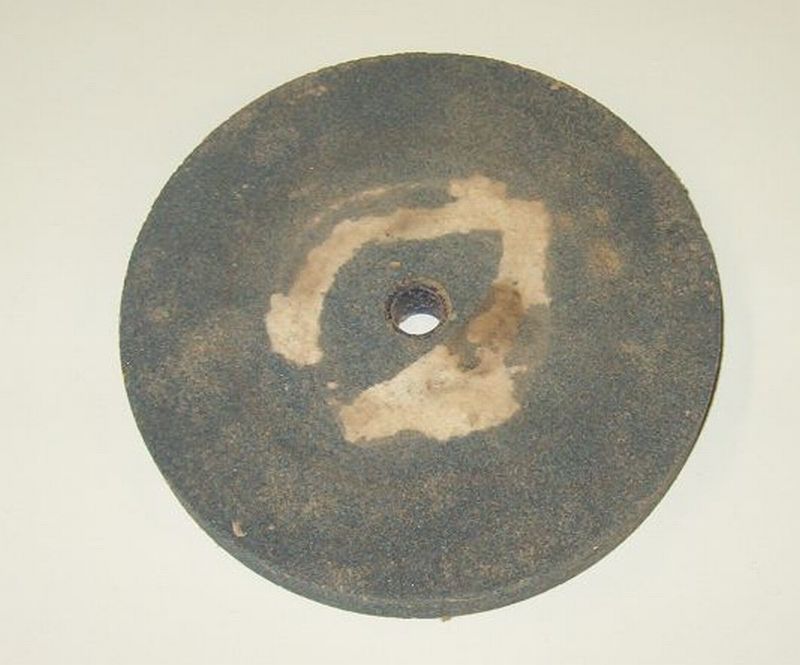
Next I remove the left wheel as it is usually the most coarse. The other wheel is left on for rough grinding of tool edges to bring them back to rough shape after hitting embedded metal and getting chipped.
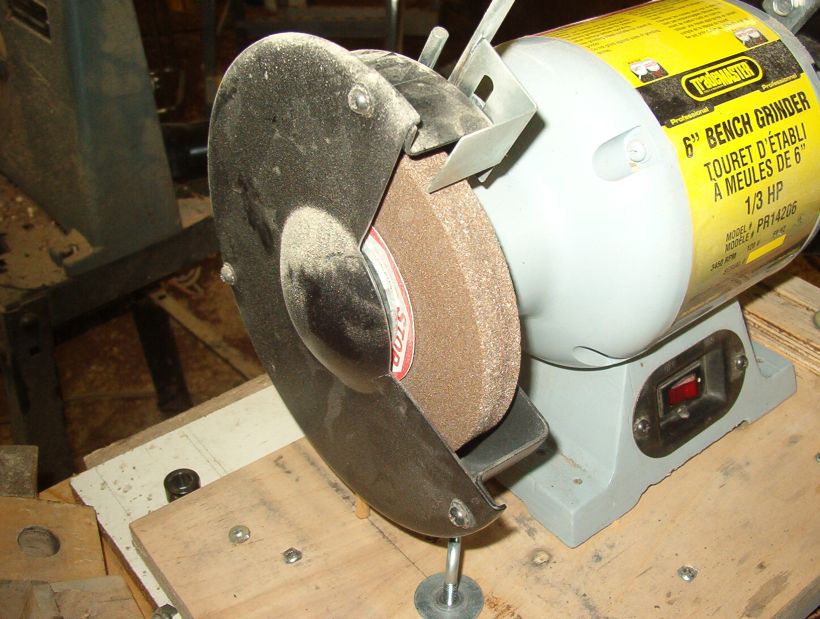
The left wheel is replaced with a wheel that turns our machine from a grinder to a sharpener. It will be an aluminum oxide wheel of appropriate diameter. Colors may vary. White is supposedly the best for wood turners as we use high speed steel (HSS) in our tools. White cuts the HSS well, and runs cool. Actually, the color of the wheel has little if anything to do with aluminum oxide. It is a coloring system that lets the manufacturer see in a glance what bonding agent has been used in making the wheel. White wheels have a very friable, or easily wearing binding agent. This allows the aluminum oxide to wear quickly which gives a cooler, cleaner wheel, but also wears quickly. This means the wheel may need to be dressed more often for wear but less for dirt. Regardless, I find the white wheels wear too fast for me.

I have a green wheel made of silicon carbide, the hardest substance next to diamond, for grinding carbide. It is 120 grit and while it wears well, it grinds too hot for HSS and is finer than needed for most wood turning.