
Basic Grinder Wheel Preparation and Maintenance
Do'nt reinvent the wheel, just get the right one and get it round.'
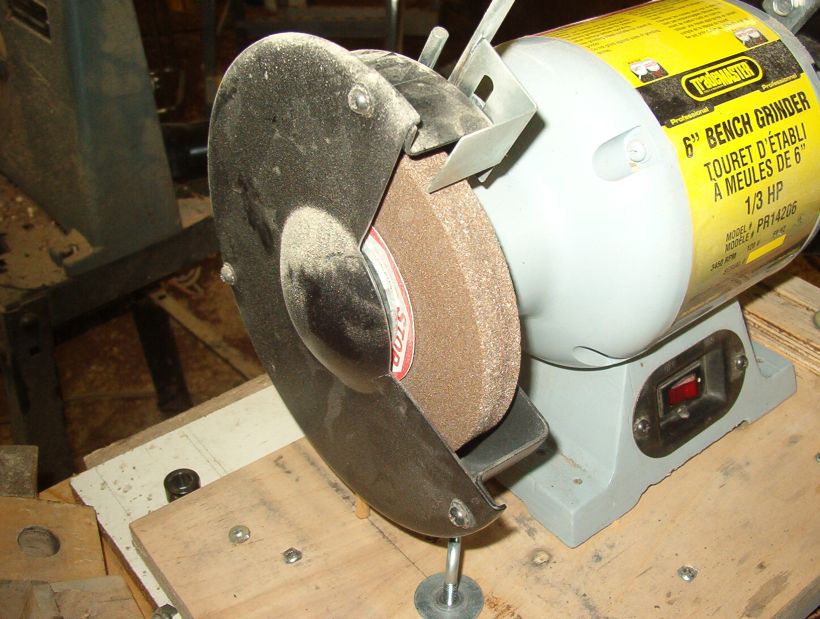
What I am using now for general sharpening is a brown aluminum oxide wheel, 80 grit. 60 will work and 100 with jigs but I feel that the 80 grit gives the best compromise of fast sharpening and a great edge.

Wheels are seldom perfectly round. They need to be dressed with either a diamond dresser such as a diamond point in a steel rod

or a star wheel dresser. The diamond point dresser requires a jig while the star wheel does not. I find the star wheel to be good enough for our needs but opinions vary. Back in my younger days when I ran a sports store and sharpened a lot of skates, I dressed the whell with a diamond point but it was held in a very sturdy jig on a quite impressive machine.

The rotating hardened steel cutters on the star dresser do a great job of cleaning the stone and are wide enough to have a reference to keep from wobbling while you dress. Over time the heads wear but are very inexpensive to replace.